
Take back your power.
Sign on as a Validator or United Ratepayers Partner (membership-based organizations). Get started →

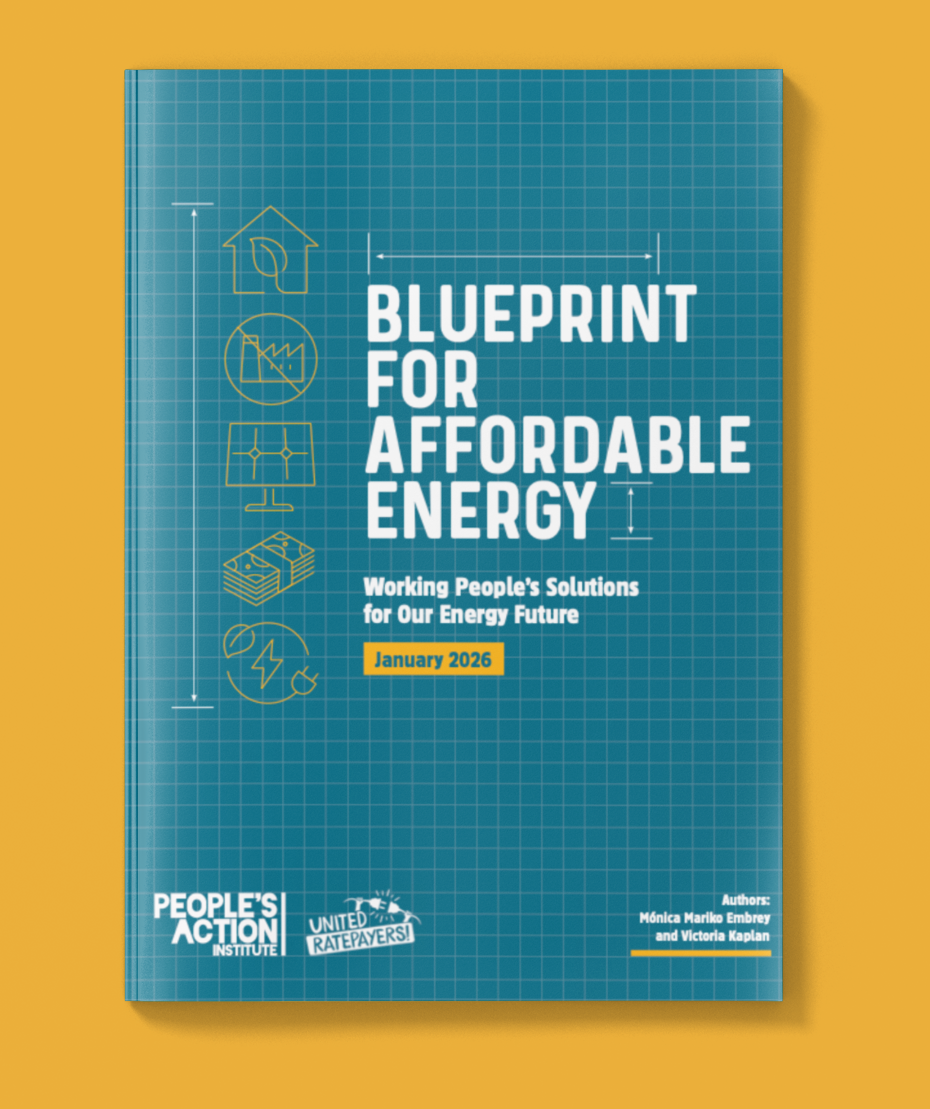
Blueprint for Affordable Energy
Get free printed copies of the Blueprint for press events, lobbying, and community organizing. Order yours now →
Corporate-owned utilities and wealthy CEOs are profiting while people struggle.
Every month, we pay our bills to energy monopolies that care more about shareholder profits than our basic needs. These companies hike rates, pour billions into fossil fuel projects, and then pass the costs onto us—while their CEOs pocket record-breaking bonuses.
They fight clean energy, influence our politicians, and make decisions behind closed doors. The system is designed to serve them, not us. And they’re betting we’ll stay too overwhelmed—or too isolated—to push back.
It Doesn’t Have to Be This Way
For decades, communities have fought back—and won. From blocking rate hikes to building local solar projects, we’ve seen what’s possible when people organize. Imagine an energy system that puts people first: affordable bills, clean air, and decisions made by communities—not corporations.
That’s the future we’re building together. A system we own. A system we can trust. A system designed for our lives, not their bottom line.
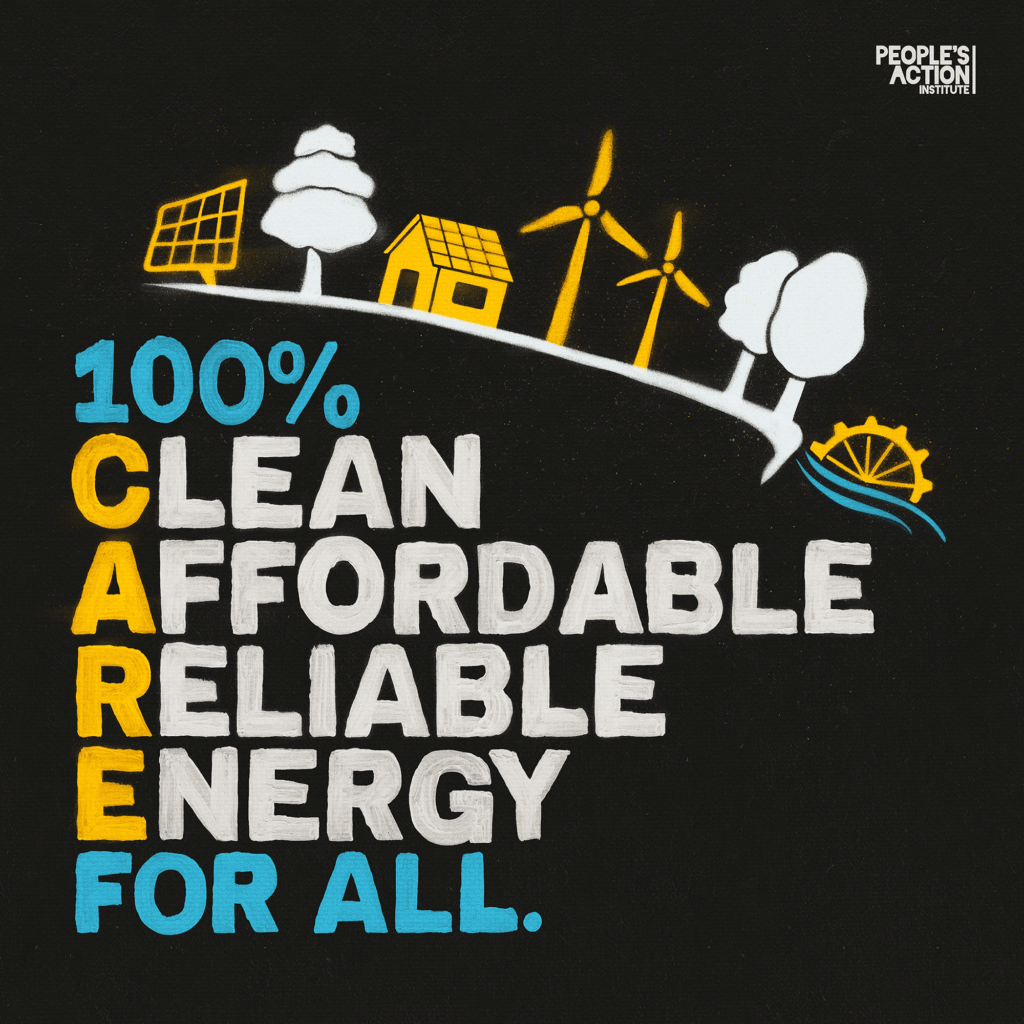
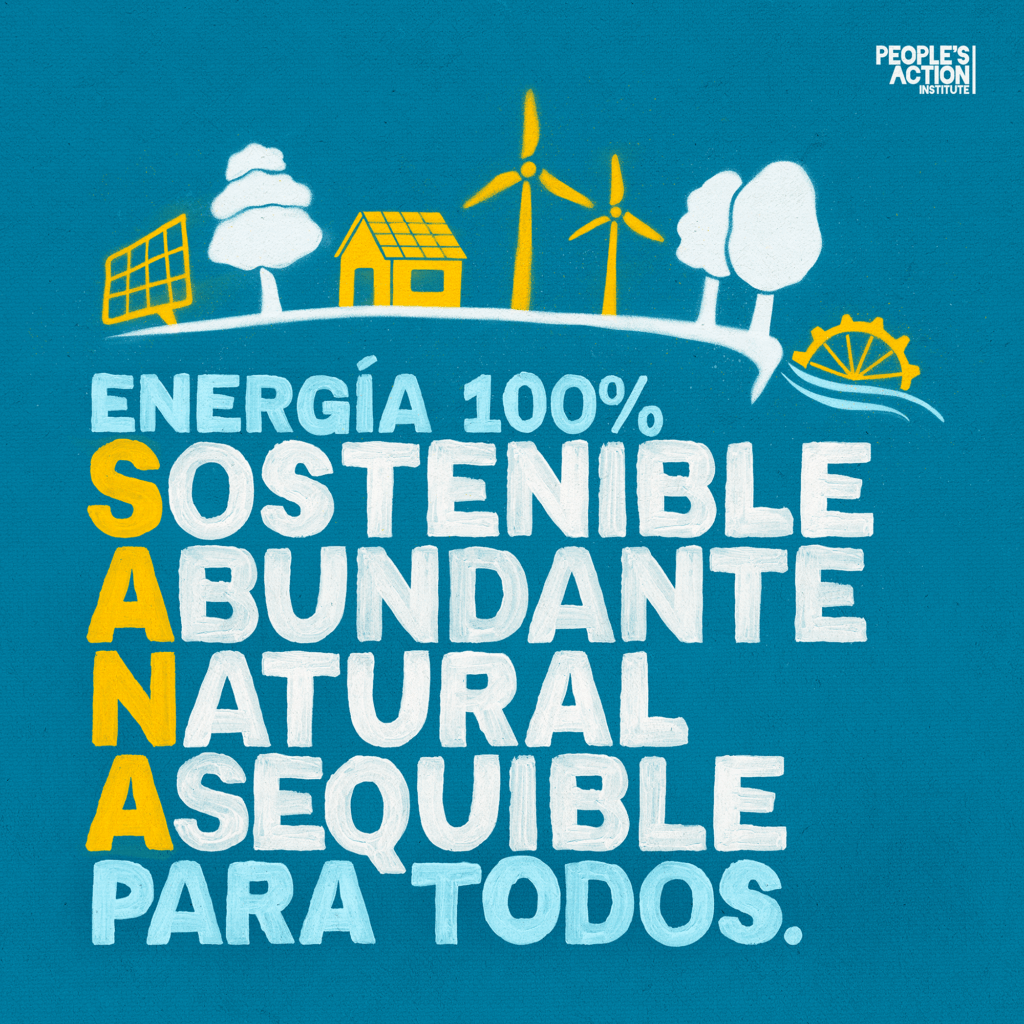
What We’re Fighting For
Our Partners Leading the Fight
Citizen Action of Wisconsin Education Fund believes all people, regardless of zip code, should have abundant, affordable, clean energy. Unfortunately, WEC Energy Group CEO Scott Lauber makes tens of millions of dollars a year while Milwaukeeans go without cooling in the summer and heat in the winter. It doesn’t have to be this way. That’s why we are coming together to demand that no Milwaukeean pay more than 2% of their income on their utility bills.
We Are Down Home builds multiracial, rural, working class power and makes sure that our elected officials work for us. That’s why we’re taking a stand against cuts to the clean energy investments that our tax dollars pay for. Our congressional representatives too often make decisions based on outside interests and corporations like Duke Energy that hurt the poor and working class here in North Carolina. We organize to hold our politicians accountable and build a future that is sustainable, affordable, and resilient.
We believe that all people deserve abundant, clean, renewable, and affordable energy. Unfortunately, our state Public Service Commission and Governor prioritize the interests of corporate utilities rather than the needs of average New Yorkers; we pay more while rich shareholders profit. It doesn’t have to be this way. Citizen Action of New York organizes New Yorkers to protect our landmark Climate Law and fight for a renewable energy future that protects us from severe weather and other effects of climate change while saving money for New Yorkers.
Communities United for Action (CUFA) brings diverse people together to create a strong voice for low- and moderate-income residents. We believe everyone should be able to stay cool during the summer and warm during the winter. Unfortunately, Duke Energy disconnects hundreds of thousands of customers from their electricity every year, even during extreme weather conditions, while profiting more than $20 billion in 2024. CUFA members are demanding that the Public Utilities Commission of Ohio strengthen Duke Energy’s summer and winter disconnection orders to achieve our vision of clean, affordable, reliable energy for all.
Utilities play a vital role in our lives, helping us keep our families warm in the winter and cool in the summer. But for decades, corporate utilities like National Fuel have burdened us with sky-high bills and relied on dirty fossil fuels like methane gas. These fuels aren’t just outdated—they’re unhealthy and deadly, and the industry has known this for over 60 years. At PUSH Buffalo, we organize communities to win lower energy costs and a safer, cleaner way to heat, cool, and power our homes. And we make clear that our voices must shape how this transition happens.
For years, Michiganders have paid the highest electric rates in the Midwest for the worst power outages, while DTE and Consumers Energy dump millions of dollars into Lansing to escape accountability. That’s why a coalition of working families in Michigan have come together to win a statewide ballot measure to prevent regulated monopoly corporations and companies seeking government contracts from making political contributions. We can no longer let them buy their way out of accountability and drown out the voice of the people! We are Taking Back Our Power!
We believe that no family should have to choose between paying their utility bill and meeting their basic needs. Unfortunately, NV Energy – part of Berkshire Hathaway – is raising our rates to build more dirty energy. That’s why PLAN builds people power across the state to win affordable, renewable energy. We do this through coalition-building, language justice, political education, and leadership opportunities for Nevada’s rate payers. And we are winning! In 2024, our community stopped NV Energy’s unfair rate increase. Now, we are organizing to win community solar and to prevent disconnections during extreme heat and cold.
CT Citizen Research Group believes that all of our residents deserve access to heat in the winter, AC in the summer, and affordable energy that leaves future generations with a more sustainable and just place to live. Unfortunately, utility companies and the politicians they back have spent $1.6 million lobbying to block Connecticut’s affordable energy goals and clean energy transition. To achieve our goal of clean, affordable and reliable energy, CCRG is willing to challenge powerful interests, and we organize people power to do just that.
In 2017, West Virginia Citizen Action Education Fund co-founded West Virginians for Energy Freedom (WV4EF) a coalition of organizations, small businesses, and public officials working to ensure every West Virginian can invest in and benefit from affordable, locally-owned renewable energy.WV4EF’s campaigns include: Solar For All-protecting fair renewable energy credits, stopping powerplant bailouts, saving rate payers thousands of dollars, and preventing unaffordable rate hikes.
With more than 32,000 members from every county in Maine, Maine People’s Resource Center believes that Mainers deserve a fair energy system, one that works as well for regular people as it does for utility executives. In 2023 alone, over 440,000 disconnection notices were sent out to Mainers, and low income households pay more than twice what is considered affordable for electricity. That’s why MPRC is organizing to pass the Energy Fairness Act to expand disconnection protections, crack down on predatory practices, connect renewable energy to the grid, and strengthens workforce standards.
9to5 organizes to build grassroots power, win people-centered policy change, and develop leaders to fight for a world where we can all thrive. In Albany, Georgia, we are organizing low-income women and families, who bear the heaviest energy burdens and face impossible choices between keeping the lights on and putting food on the table, to demand a utilities system that is accessible, affordable, responsive, and transparent.
Columbus Stand Up! has launched the “Lights Out on AEP” campaign to tell the Public Utilities of Commission to reject AEP Ohio’s latest rate increase request to lower costs for consumers and small businesses, and push for investments in clean energy.
In 2025, Minnesota’s Public Utilities Commission approved the sale of Minnesota Power—the state’s second largest utility serving northern Minnesota—to private equity interests, including BlackRock’s Global Infrastructure Partners. Now CURE, allied organizations, and community members who opposed this private equity takeover are uniting under the banner of “MN Power by the People,” a campaign to hold Minnesota Power’s new owners and regulators to account and build the foundation for a people-powered energy future across the Minnesota Northland.
The Green Workers Alliance (GWA) mobilizes utility-scale solar and wind workers for more and better jobs in the renewable energy field. We are partnering with allies on regional campaigns to push corporate utilities to lower rates and increase use of the most affordable form of energy–renewables. We are proud to have participated in campaigns at AEP and Southern Power. We will keep organizing to put the people’s interests ahead of corporate profits!
Our Partners

Our Allies



Frequently Asked Questions
Am I a ratepayer? What is a ratepayer anyway?
Do you pay a bill for the gas or electricity you use in your home or business? If yes, then you are a ratepayer. Nearly three quarters of U.S. households get their power from a corporate utility, traded on Wall Street.
Aren’t utilities already regulated?
Yes, but those regulations are outdated – more than 100 years old. Most decisions about how much you pay, how much profit the utility makes, and whether you get power from clean solar and wind or dirty fossil fuels, depends on a handful of commissioners in your state Public Utility Commission.
How do utilities make money?
Unlike other industries, monopoly utilities are guaranteed profit when they spend ratepayer money – on average, utilities in the U.S. are guaranteed 10% “return on equity.” They make money by building and upgrading physical assets like pipelines and power plants. For example, in 2025 Duke Energy announced plans to spend $83 billion for more gas plants and transmission lines – that translates to $8.3 billion in guaranteed profit. The more they build, the more they take home in profit. And because it’s more expensive to build fossil fuels than clean energy, the more fossil fuel infrastructure they build, the more they take home in profit. And all that money for building? It comes directly from ratepayers – the bills that you pay each month.
Why should I care about my utility company?
From Colorado to New Hampshire, from North Carolina to Ohio, no matter where we come from, what we look like, or how much money we make, we all deserve clean air and clean water, to stay cool in the summer and warm in the winter, and to protect the places we love and call home for future generations.
Utility companies control how much of our hard-earned money we pay, if we breathe clean air, and if our communities will face the next storm, fire, or flood.
Isn’t clean energy more expensive?
In fact, clean energy, like solar, wind, and geothermal, is cheaper, healthier and faster to build than fossil fuel energy like oil, coal, and gas. But because of outdated and perverse rules, corporate utilities are incentivized to build more expensive fossil fuel infrastructure, like dirty gas plants. And ratepayers get stuck paying higher bills for more pollution.
Will switching to wind and solar kill jobs?
Switching to wind and solar will create thousands of new jobs.
I don’t want more blackouts – it’s not always sunny or windy. Don’t we need gas and coal for reliable power?
More of us are experiencing extreme heat waves, storms, and fires. Recent experiences of extreme cold in Texas and heat waves in California show that gas and coal plants under-perform in extreme weather. They’re less reliable and more polluting. Wind and solar, with extra power stored in batteries, increase energy reliability.
What does this have to do with climate change?
Burning oil, coal and gas contributes to climate change. In 2022, the electric power sector was the second largest source of U.S. greenhouse gas emissions, accounting for 25% of the U.S. total. Using clean renewable energy to power our homes and businesses will decrease total emissions and lessen the impacts of climate change.
What about data centers?
After a period of declining energy use thanks to energy efficiency, data centers – giant warehouses filled with computers that crunch data for AI and the cloud – are reversing the trend and increasing the U.S.’s overall energy use. Unfortunately, big tech companies like Amazon, Google, Meta, and Microsoft are building new expensive, dirty fossil fuel plants, and driving up bills for ratepayers like you and me. What’s more, data centers use so much energy that they threaten to trigger widespread blackouts for regular utility customers – you and me.
What do you mean by frontline communities?
Frontline communities are those hurt first and worst by the fossil fuel economy. Frontline communities are most often working class people, Black, Indigenous, and people of color communities, and immigrants. It’s not a coincidence that monopoly utilities put polluting gas plants and coal ash where they think they can get away with it. As more communities experience the impacts of extreme weather – fires, floods, heat waves, hurricanes, tornadoes – the frontline expands. Each of us is needed in this fight.
Has this kind of organizing worked before?
You bet it has. Thirteen states have passed laws banning corporate utilities from using ratepayer money to lobby against clean energy. When communities impacted by dirty coal-fired power plants came together, they shut down 390 coal-fired power plants, saving 10,000 lives and preventing tens of thousands of asthma attacks.
How do we win?
We know that when we’ve come together across age, race, and place in the past, we’ve made life better for everyone. The truth is, these mega-corporations depend on us to make their billions. We have power – if we get together and organize.
Join Us
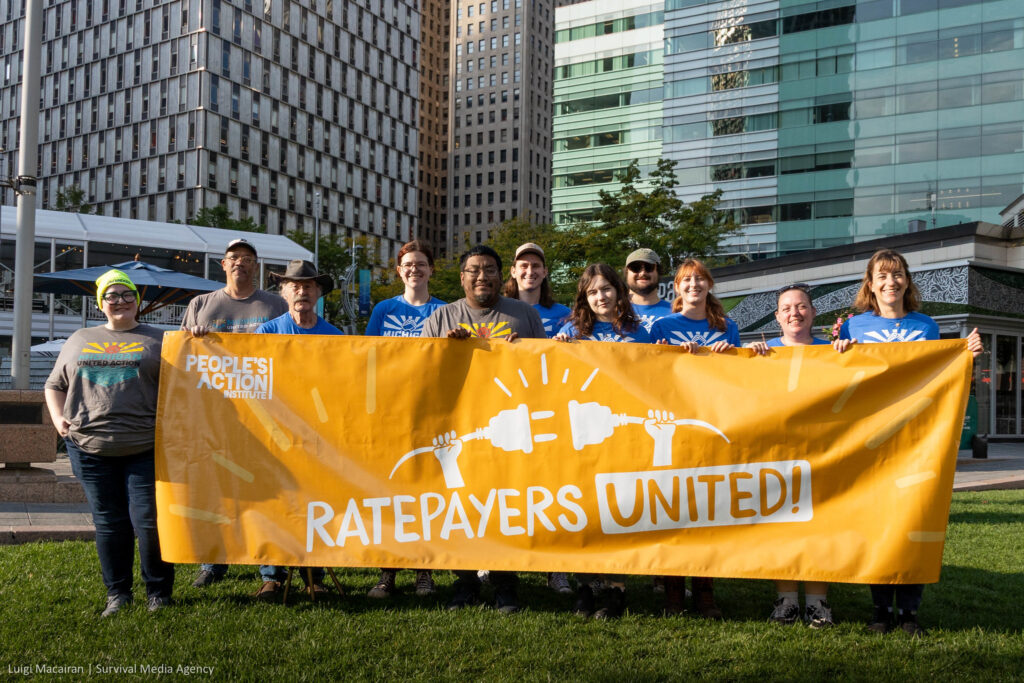
Whether you’ve had your lights cut off, your bill doubled, or you’re just fed up with corporate control, there’s a place for you in this movement. Across the country, thousands of ratepayers are coming together to push back on monopoly utilities and build the energy future we actually deserve.
When we act together, we win.