
2025 Impact Report
Letter from Sulma Arias, Executive Director
In 2025, we woke up to a harsh reality: our democracy will not survive if we do not defend it. It is up to us. From the dismantling of government agencies and cuts of more than a trillion dollars from families to fund giveaways for the rich, to targeting immigrants with violent, militarized occupations in our cities, our people came under attack this year as never before.
Yet People’s Action Institute was ready, and we rose to meet the moment. Through our Organizing Revival, we have built a powerful new network of allies across the nation who stand together to meet these challenges. We have trained thousands of organizers and members of local and state organizations in the most effective techniques to protect democracy. Through local groups, these brave people are now defending their neighbors and making strong voices heard as we demand a new direction.
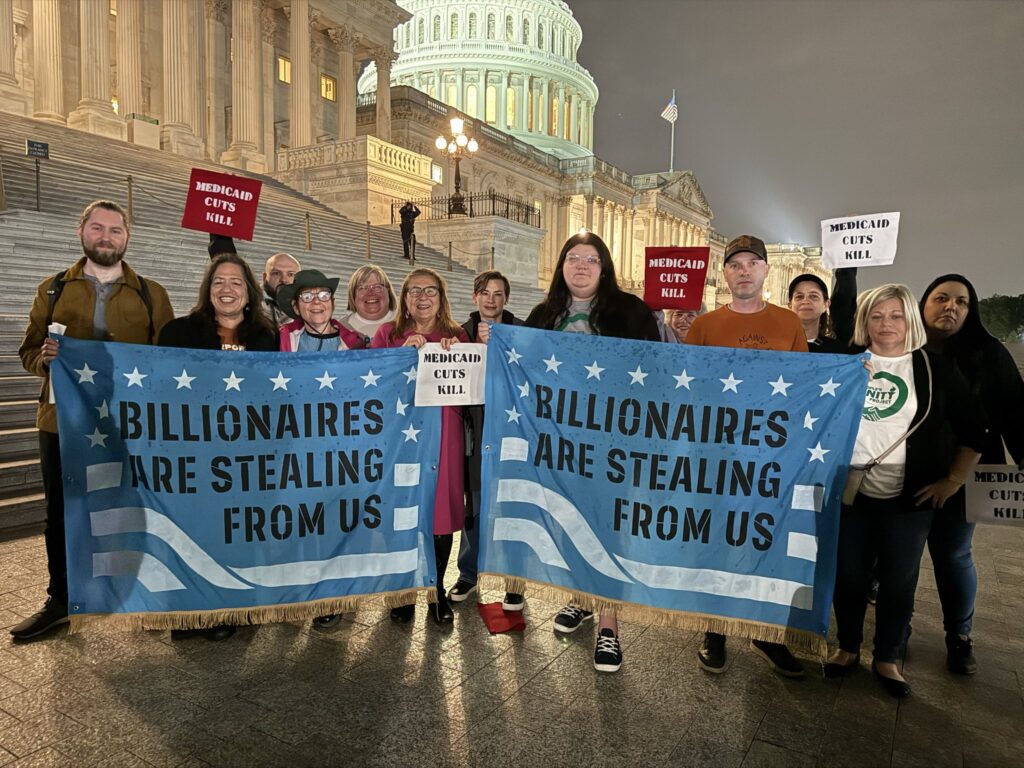
We brought hundreds of grassroots leaders to Washington, DC to protest budget cuts to food, housing, green energy and health care to fund tax cuts for the rich, and to shine a light on the billionaires and corporations, such as Blackstone, United Healthcare and the members of the American Gas Association, who benefit from these giveaways. And across the nation, our members spoke out about our growing affordability crisis and the gold rush to build AI data centers, which is driving up energy prices. Even as the federal landscape turned bleak, our affiliates continued to organize and win legislative victories in states like Indiana, Nevada and New York to defend health care, jobs and the environment.
In October, we gathered more than a thousand organizers from People’s Action Institute member organizations and our allies for a Pro-Democracy Organizing Revival Boot Camp, where we practiced the strategic pivots we will make together to defeat authoritarianism. In November, we gathered again in Chicago to launch a campaign to demand AT&T drop its contracts with ICE and other agencies that violate our civil rights.
Please read on to learn more about what we did in 2025. In 2026, we will deepen our engagements, with a bold arc of activity to defend democracy and end our affordability crisis.
I will continue to raise my own voice whenever I see a need for change, from the private-prison empire being built with our tax dollars to how community organizing is our most effective tool to advance social justice in this moment.
As we move into 2026, we will organize to defend our democracy, ensure every vote gets counted, and demand solutions to the affordability crisis that affects us all. Please consider offering your support to this important work.
We must remember: as a nation, we have moved through even darker moments and emerged stronger. With the power of organized people, we can do it again.
In solidarity,
Sulma Arias
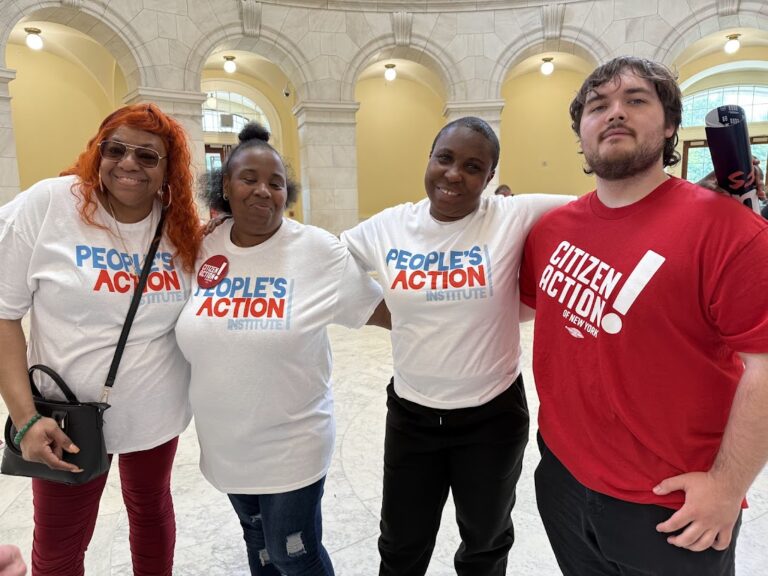
Highlights of People's Action Institute's Work in 2025
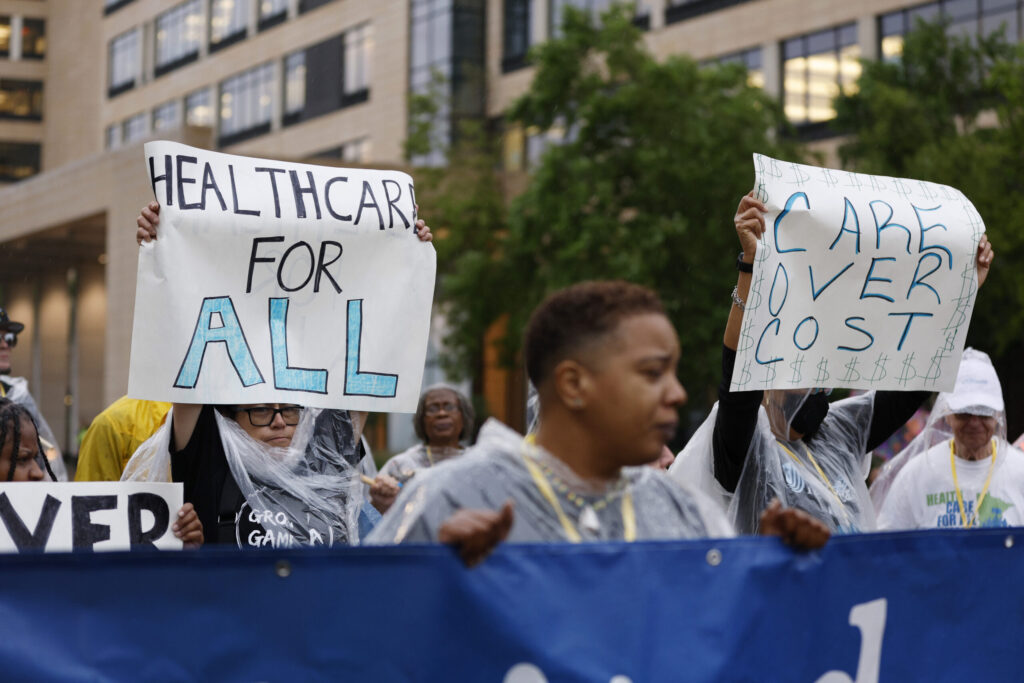
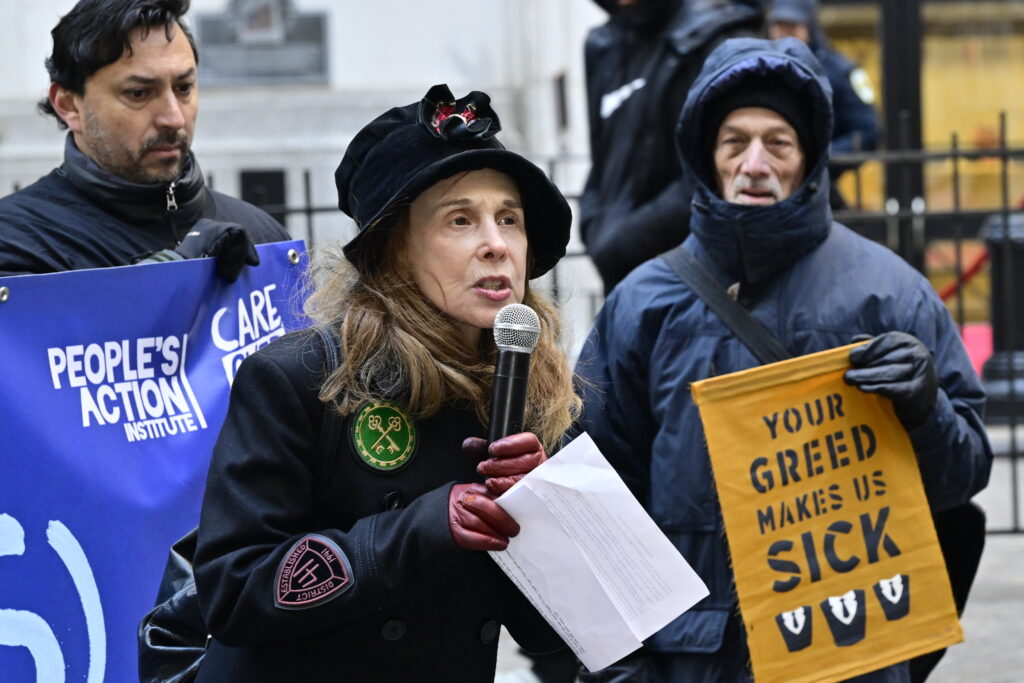
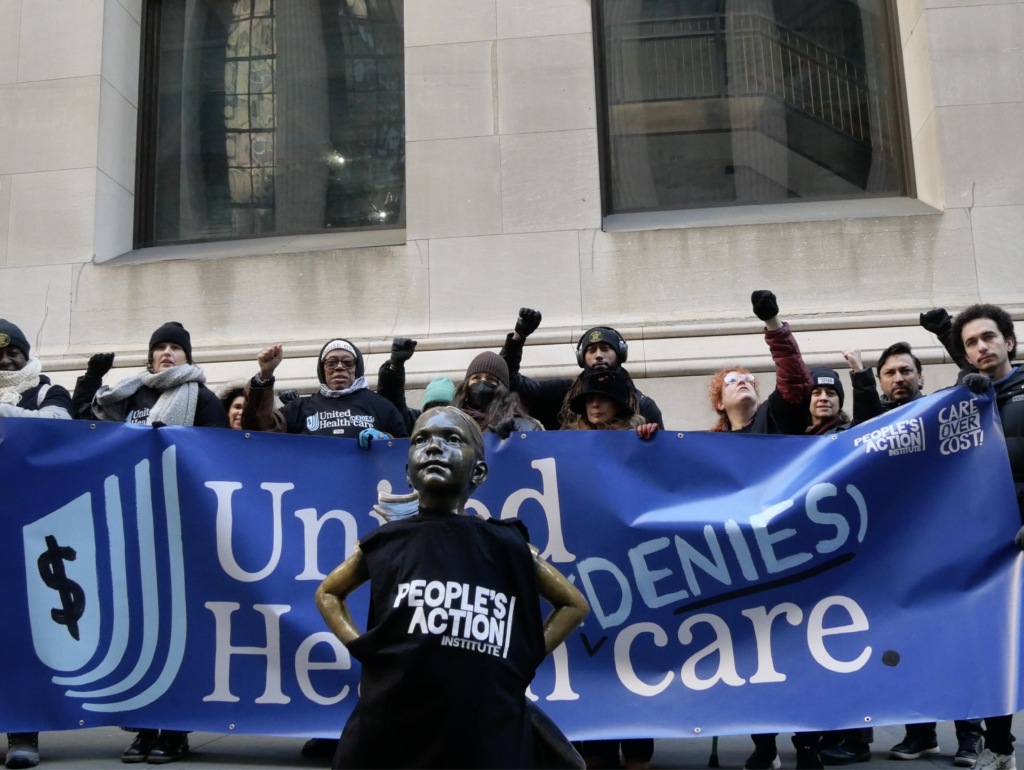
On January 16, as United Healthcare announced record earnings, our Care Over Cost campaign brought doctors and patients who have been denied care together for a peaceful protest on the steps of the New York Stock Exchange to share stories, and potential solutions to our epidemic of care denials. Over the course of 2025, Care Over Cost’s multiyear, multi-state campaign to draw attention to this practice of denying claims to fuel corporate profits bore significant fruits. In May, Sir Andrew Witty, United’s chief executive, was forced to step down, and by December, more than thirty states had passed legislation to rein in denials of care.
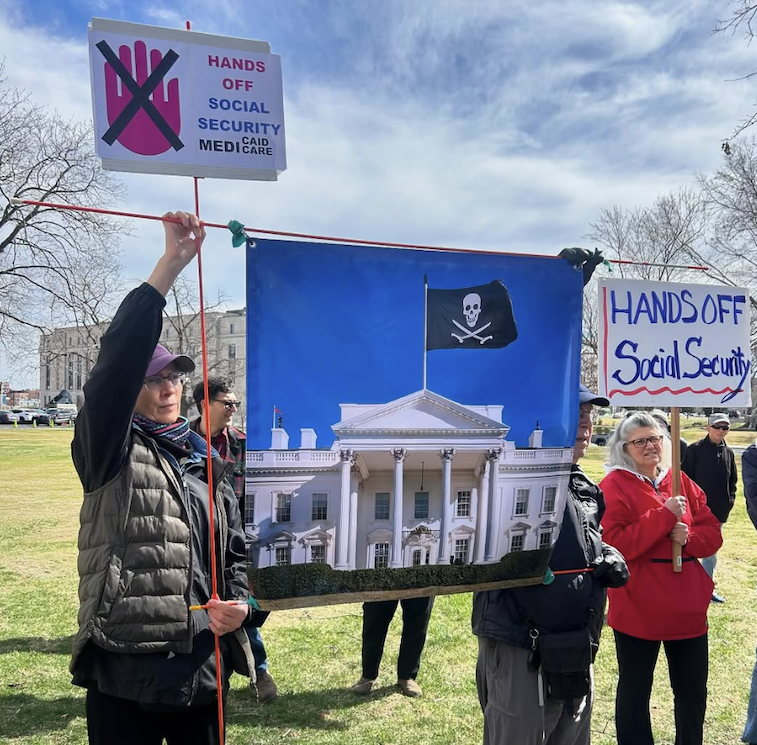
In February, we brought more than a hundred grassroots leaders from 60 congressional districts across 24 states, 24 member organizations and 10 ally organizations to Washington, DC to oppose cuts to healthcare, housing support and climate protections to give handouts to billionaires. We held press conferences on Capitol Hill and virtual events with members of the Congressional Progressive Caucus, including U.S. Representatives Pramila Jayapal, Greg Casar, Delia Ramirez and Senator Bernie Sanders. While HR1, the “Big Ugly Bill,” ultimately passed, after pressure Sens. Thom Tillis of North Carolina and Susan Collins of Maine voted against it, and four Republican Representatives signed a petition to protect the Affordable Care Act, forcing a House vote.
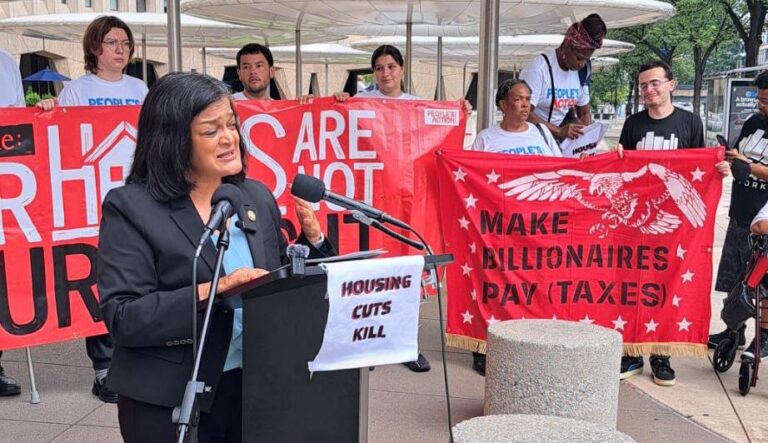
In June, People’s Action Institute partnered with VOCAL-US, the National Homelessness Law Center, the Western Regional Advocacy Project and Rep. Jayapal to denounce the criminalization of homelessness, in a “Housing Now” day of action and virtual event on the first anniversary of the Supreme Court’s Grants’ Pass decision.
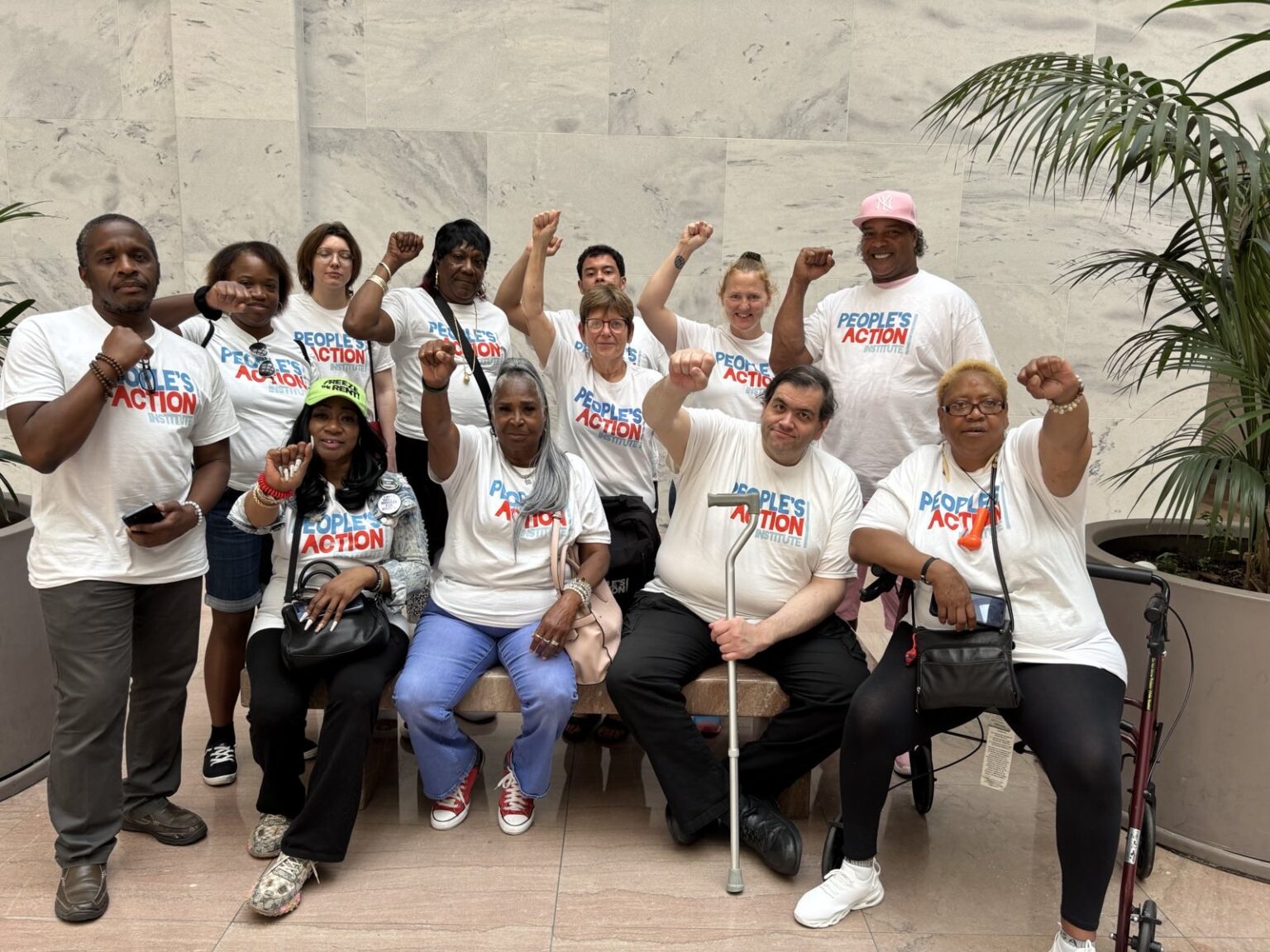
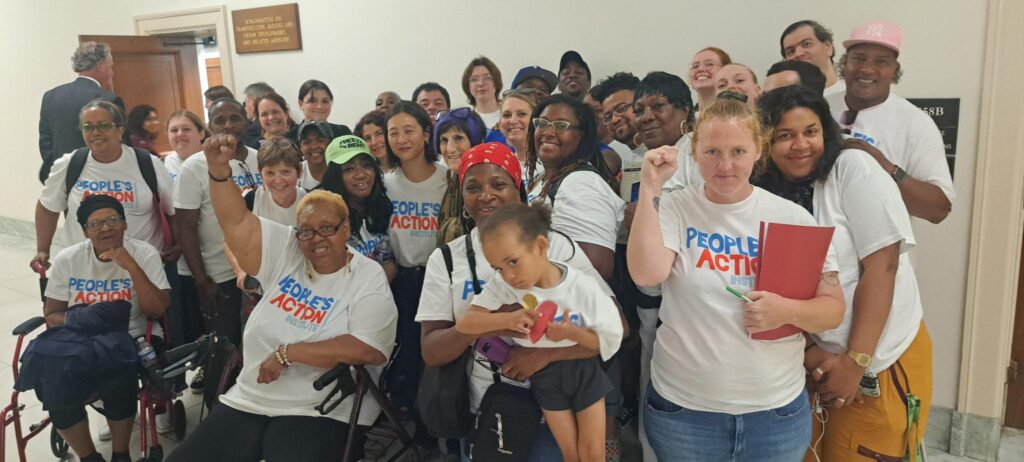
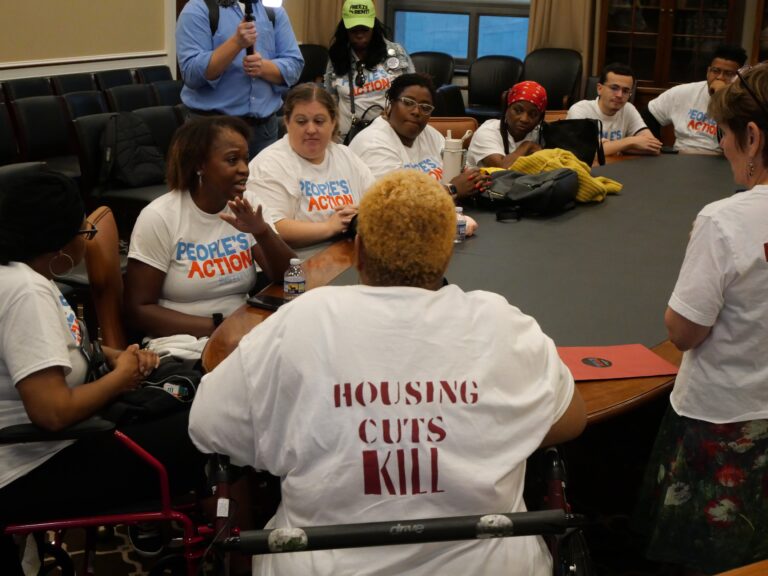
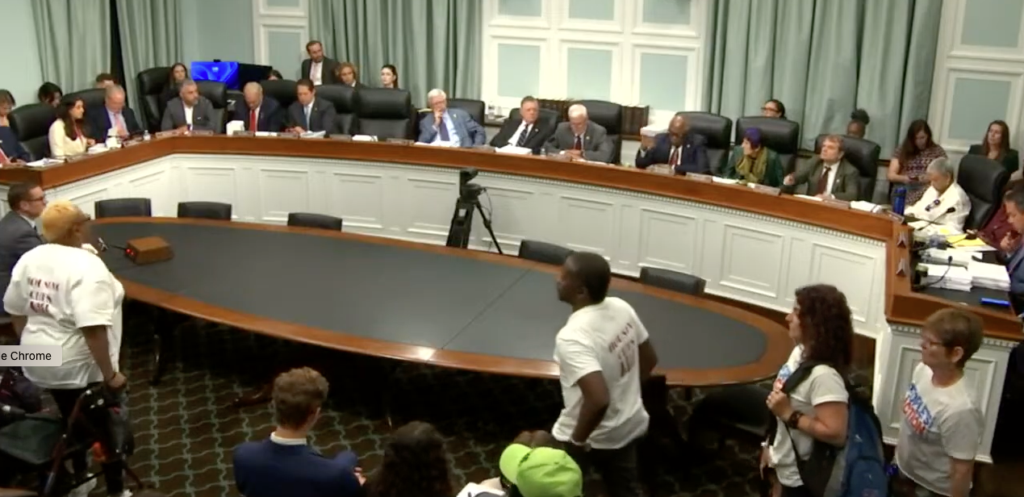
In July, we brought a delegation of thirty People’s Action Institute members from six states who are affected by the $16.8 billion cuts to housing support mandated by the Trump administration to Capitol Hill as the House Appropriations Transportation, Housing and Urban Development Subcommittee met to implement these cuts.
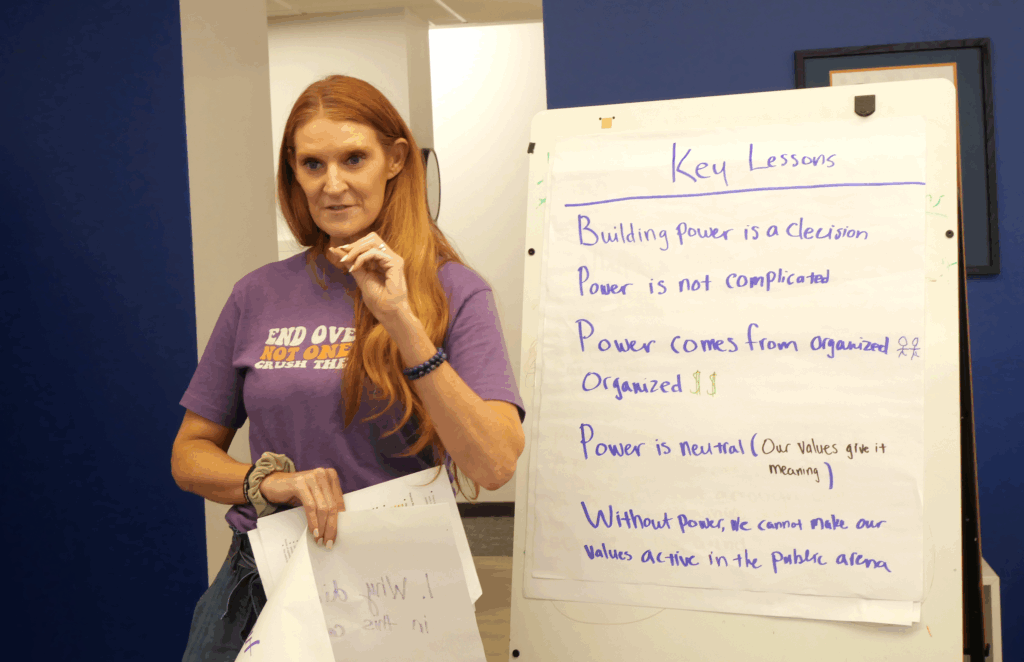
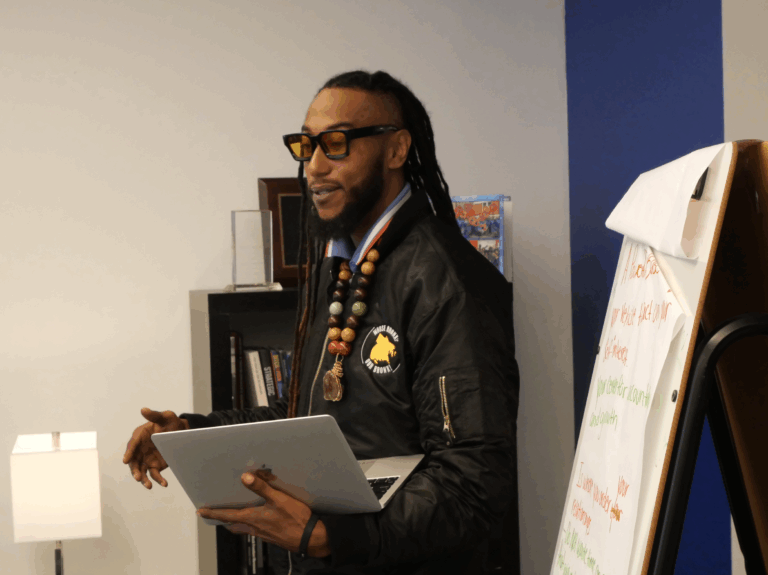
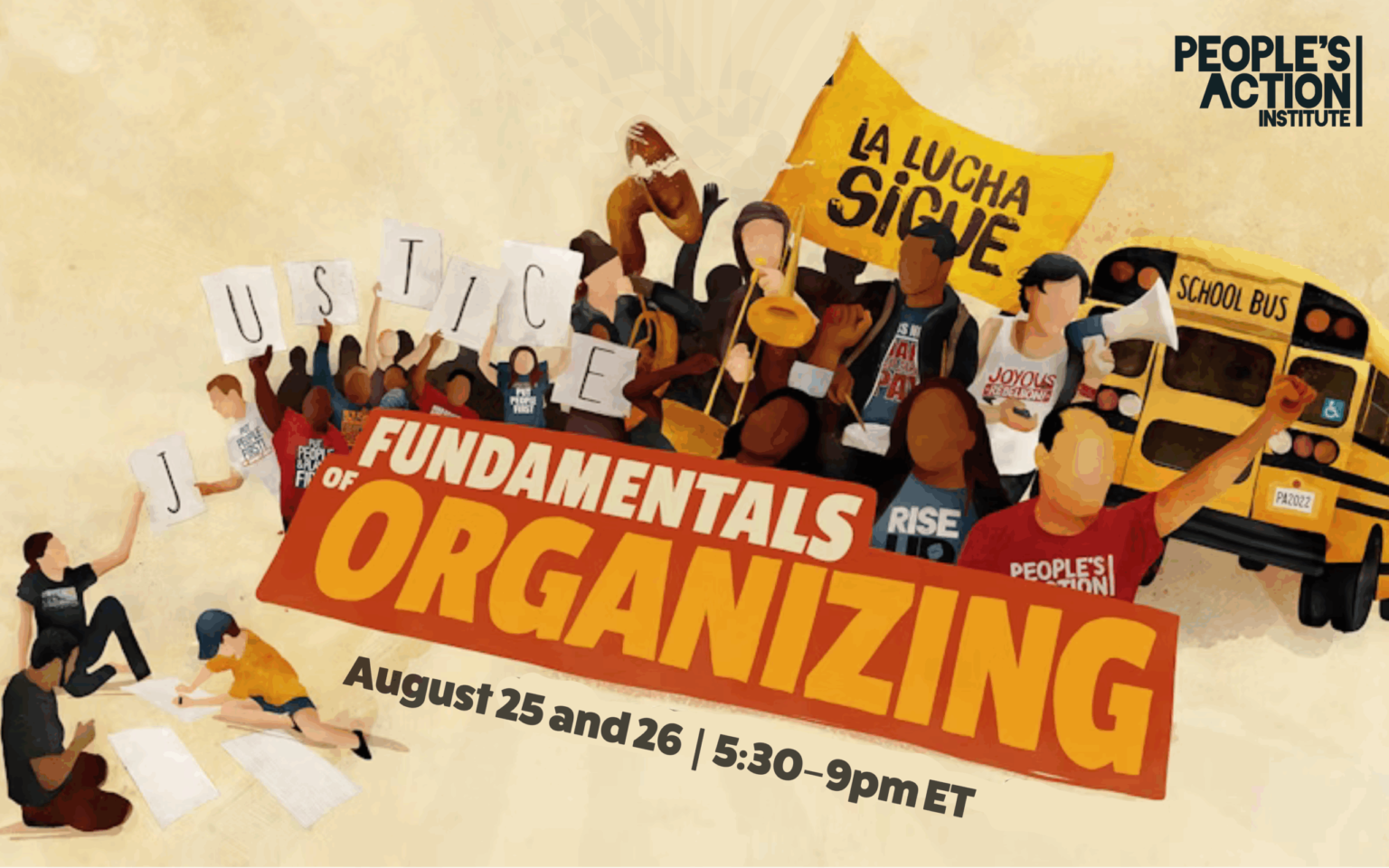
We expanded our training program throughout the year with a revamped set of courses and events, with three regional in-person “Training for Trainers” for experienced organizers in Colorado, Indiana and New York, and a “training blitz” in Ohio. We held virtual “Fundamentals of Organizing” and “Organizers Bootcamp” sessions for expanded cohorts.
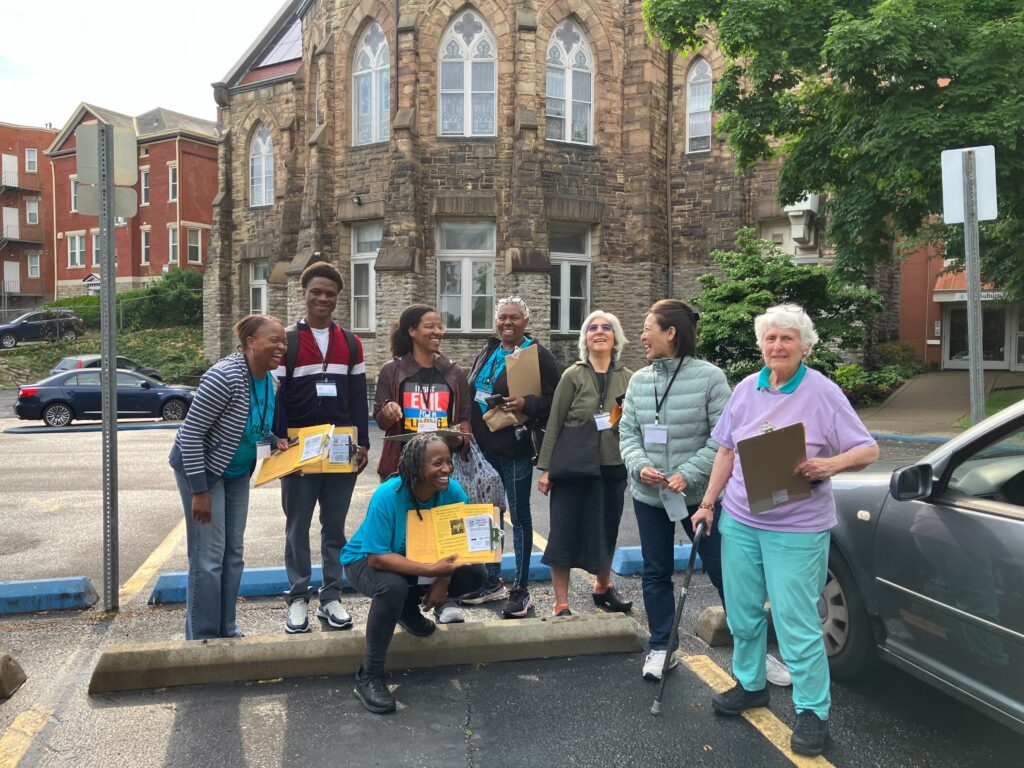
We created a new Pathways to Power cohort, with ten state-level affiliates, to transform how grassroots organizations develop the technology and practices of leadership development for effective base-building. We protested the Gold Rush to build AI data centers in states like West Virginia and Pennsylvania, and launched “United Ratepayers,” a new campaign to lower utility rates and win clean energy at the same time. Based on the success of our pilot Multi-Racial Working Class listening campaign in four states, we will expand this initiative exponentially in 2026.
In October, we gathered nearly a thousand senior organizers from over three hundred organizations for our Pro-Democracy Organizing Revival Bootcamp, where we trained in the most effective techniques to defend civil liberties and society. The curriculum we developed for this event with Future Currents and other trainers has since been made freely available to all groups who want to train their own members in the defense of democracy.
In November in Chicago, together with our allies in the newly formed Organizing Revival National Network, which now includes the nation’s largest networks of grassroots, member-based advocacy groups and hundreds of local organizations, we launched a call for AT&T to drop its contracts with Immigration and Customs Enforcement (ICE) and Customs and Border Patrol (CBP). People’s Action Institute member organizations have also played essential roles on the ground in creating rapid-response networks to defend their communities from illegal and aggressive interventions by ICE and CBP in states like Illinois, Maine, Minnesota and California.
State and Local Victories
People’s Action Institute’s national strategic issue campaign cohorts have helped our member groups develop strategies to win on key issues at the state and local level.
People’s Action Institute has led a multi-year, national campaign for federal investment in climate and environmental justice, which paved the way for victories such as FEMA funding to address Cincinnati’s sewer crisis, a $249.7 million grant for solar power installations in Harris County, Texas, funding for weatherization to lower utility bills in North Carolina, and a $20-million Community Change grant in Buffalo, New York.
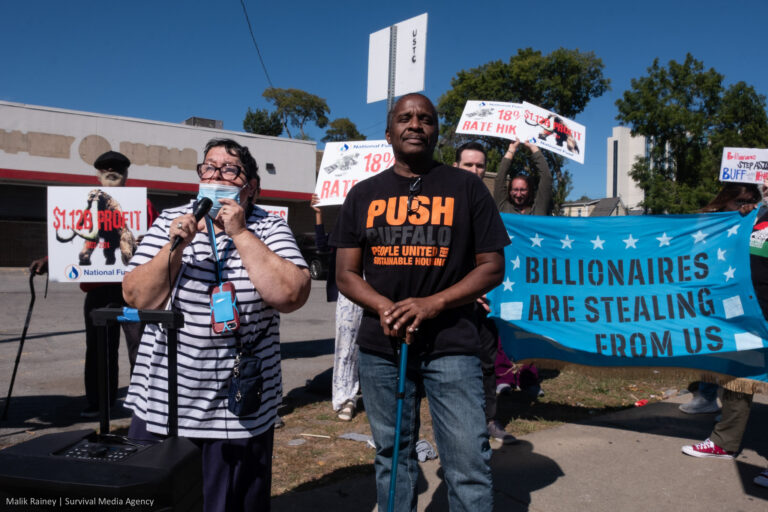
People’s Action Institute affiliate groups in New York State also fought for and won a landmark $75-billion “Make Polluters Pay” fund, which will force fossil-fuel producers to pay in advance for the consequences of extreme weather events. They won an end to the so-called “100-foot rule,” which forced consumers to subsidize the expansion of fossil-fuel infrastructure, and New York’s governor committed to $50 million in rental aid for tenants. In Wisconsin, lawmakers introduced a bill to cap utility rates at no more than 2 percent of income, and Maryland ended subsidies for trash incinerator companies.
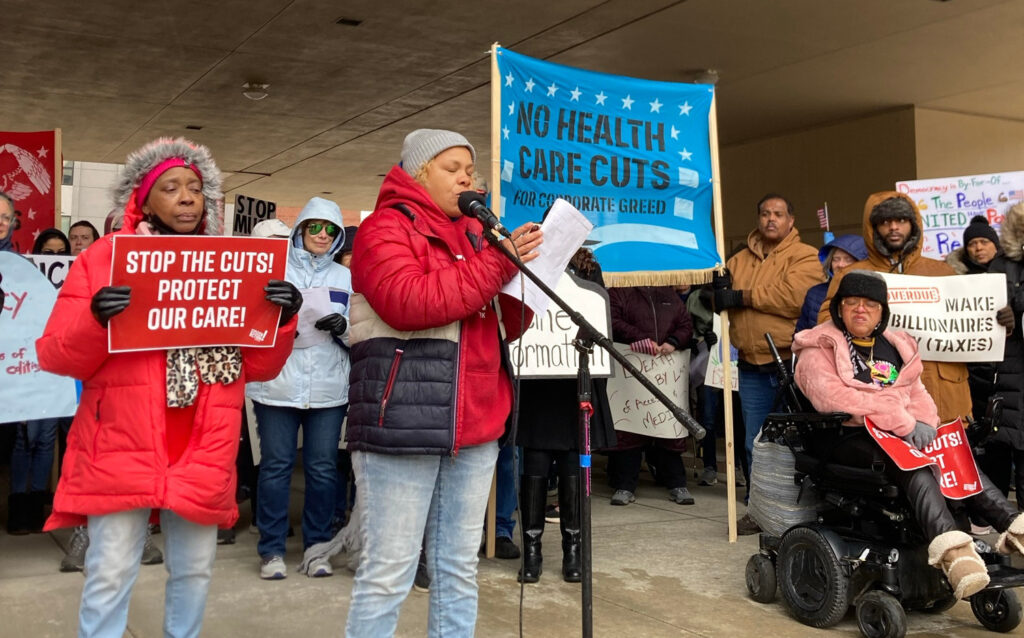
Our Care Over Cost campaign brought national attention to private health insurers’ denials of care, which prompted state-level legislative victories such as HB 1337 in Maryland, which forces private health insurers to disclose data about claims denials. In October, we published an in-depth study of how health care claims denials harm vulnerable patients in New York State. New Jersey Resource Project celebrated the end of “body brokering” in the state, a form of health care fraud through which unscrupulous detox centers take advantage of patients.
In New York City, the Northwest Bronx Community and Clergy Coalition celebrated an agreement to redevelop the Kingsbridge Armory around the organization’s vision for the long-abandoned facility to become a hub for family-sustaining jobs, small business support, and community ownership, with a firm Community Benefits Agreement.
In Washington State, People’s Action Institute member groups OneAmerica, Firelands Workers Building Community Power and the WashCAN Education and Research Fund worked together to defend $2.2 billion in funding for schools, climate defense and health care from a billionaire-backed initiative to roll back the state’s capital gains tax, and secured an executive order preventing the misuse of public databases by ICE and DHS, and won rent stabilization.
Down Home North Carolina successfully defended funding for domestic violence, emergency services, libraries and teacher salaries, while Missouri Jobs with Justice successfully collected over 100,000 signatures to get a higher minimum wage and paid sick leave on the ballot, which then passed by a wide margin.
In Nevada, the Progressive Leadership Alliance (PLAN) won state legislation requiring landlords to disclose all fees to tenants, for school districts to report on the use of force, and for employers to provide cooling centers, drinking water and personal protection equipment for workers in agriculture and other industries affected by climate change.
In Indiana, the Hoosier Action Resource Center has won stunning victories to defend access to the Healthy Indiana Plan, one of the state’s most popular Medicaid programs, and defeated a plan to disenfranchise Black voters by redrawing voting maps.